
Why Liquid Cooling Is Best for Photovoltaic Solutions Storage
As solar generation expands, energy storage has become increasingly important for making photovoltaic power more flexible and usable. For commercial and industrial projects, battery systems may face repeated charging and discharging, variable loads, and challenging outdoor temperatures. Effective thermal management is therefore a major consideration when selecting photovoltaic solutions. Among available approaches, liquid cooling offers strong advantages for maintaining temperature consistency, supporting battery performance, and improving long-term system reliability.
Why Thermal Management Matters in Photovoltaic Solutions?
Solar generation varies with sunlight, while electricity demand may peak when solar output declines. Battery energy storage can shift surplus solar power to periods of higher demand, providing flexibility for renewable integration.
Batteries also generate heat during charging and discharging. Effective thermal management helps control temperature differences between cells and supports consistent performance and battery lifetime.
For commercial projects, this consideration becomes even more significant. A commercial solar panel system may operate with substantial battery capacity and frequent cycling. Maintaining an appropriate thermal environment can help the storage system operate more consistently across different load and weather conditions.
Why Liquid Cooling Has an Advantage?
Liquid cooling circulates coolant through a heat-exchange system to remove battery heat. Compared with air, liquid generally provides better heat-transfer capability and temperature uniformity, which can support more consistent battery performance and longer service life.
Liquid cooling can also provide a compact thermal management approach. NREL research indicates that liquid cooling can provide more effective heat transfer while occupying less volume than some air-cooling arrangements. This characteristic can be useful where commercial energy projects need to maximize available installation space.
Better Fit for a Commercial Solar Panel System
Commercial solar systems may use storage to increase renewable energy use, manage demand, and improve energy flexibility. Frequent charging and discharging make effective thermal management important.
Liquid cooling can be particularly suitable for larger storage systems where heat generation is higher. While air cooling remains practical for simpler projects, liquid cooling can offer stronger thermal performance for demanding photovoltaic storage applications.
How Liquid Cooling Supports Long-Term Battery Value?
Battery storage is a long-term infrastructure investment, so project developers and operators need to consider lifecycle performance rather than only initial equipment costs. Thermal conditions can influence battery degradation, making effective thermal management an important part of lifecycle planning.
The value of liquid cooling is therefore connected to more than heat removal. By helping maintain consistent temperatures across battery cells, a well-designed thermal management system can support stable operation and help protect the long-term value of the storage asset.
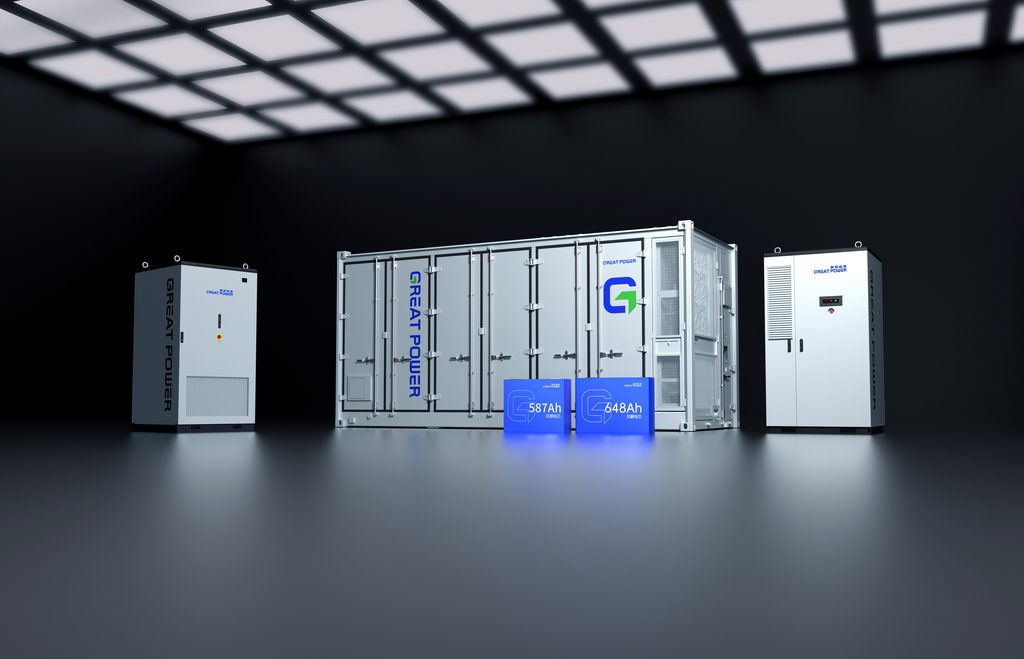
For example, the LiqRack series from Great Power uses liquid cooling and is designed for container energy storage systems. Its published specifications state that temperature differences can be maintained within 2°C, while the manufacturer reports a 20% longer cycle life compared with its air-cooled counterpart. The series also has an operating temperature range of -40°C to 60°C and an IP67 protection level.
Integrating Solar, Storage, and EV Charging
Modern photovoltaic solutions increasingly combine generation, storage, and flexible electricity consumption. This is particularly relevant to commercial sites that operate electric vehicle charging infrastructure.
The intelligent PV solution from Great Power integrates renewable energy access, energy storage management, EV fast charging, and EV inspection services into one solution. Its purpose is to increase the utilization of renewable electricity while providing fast charging and energy management capabilities.
When storage is incorporated into such an integrated system, thermal management becomes part of the overall reliability strategy. A liquid-cooled battery system can provide a controlled thermal environment for the storage component while the broader platform coordinates renewable generation, energy storage, and charging activities.
This integrated approach can be valuable for commercial facilities, charging stations, industrial parks, and other sites where electricity generation and consumption occur at different times.
What Businesses Should Consider When Choosing Storage?
Choosing a battery system for photovoltaic applications requires more than comparing rated energy capacity. Businesses should evaluate thermal management, operating temperature range, protection level, cycle performance, safety architecture, installation requirements, and system integration capabilities.
Liquid cooling should also be assessed as part of the complete energy storage architecture. Cooling equipment, controls, monitoring, and maintenance requirements all influence project performance. A well-engineered system should coordinate battery management and thermal management rather than treating cooling as an isolated component.
Great Power provides energy storage products across utility-scale, commercial and industrial, residential, UPS, and portable applications. Its portfolio includes cells, packs, racks, cabinets, and containerized systems, allowing different storage architectures to be matched with different project requirements.
Conclusion
Liquid cooling is becoming an important option for high-performance photovoltaic storage because it offers effective heat transfer and strong temperature uniformity. For larger commercial projects, these characteristics can support stable battery operation, lifecycle performance, and reliable energy management.
As photovoltaic generation, battery storage, and EV charging become increasingly integrated, businesses need storage technologies designed for demanding operating conditions. Selecting the appropriate thermal management approach can therefore be an important step toward building a more reliable and efficient commercial solar panel system.