Are Fixed or Movable Seating Options Better for Modern University Lecture Halls?
Lecture halls must accommodate more than rows of students facing a screen. Different teaching methods call for different room arrangements, from traditional presentations and examinations to group discussions and collaborative projects.
The choice between fixed and movable university seating influences how easily a space can adapt, how students interact, and how instructors manage classroom activities. Neither arrangement suits every academic environment; the better option depends on the institution’s teaching priorities, room dimensions, and expectations for daily use.
How Teaching Methods Shape Seating Requirements
Traditional lectures usually follow a predictable pattern: students face the instructor, presentation screen, or demonstration area. Fixed seats support this arrangement by maintaining consistent rows and clear sightlines. Their stable positioning also helps establish orderly circulation routes, which can be particularly useful in large lecture theatres where hundreds of students enter and leave within a short period.
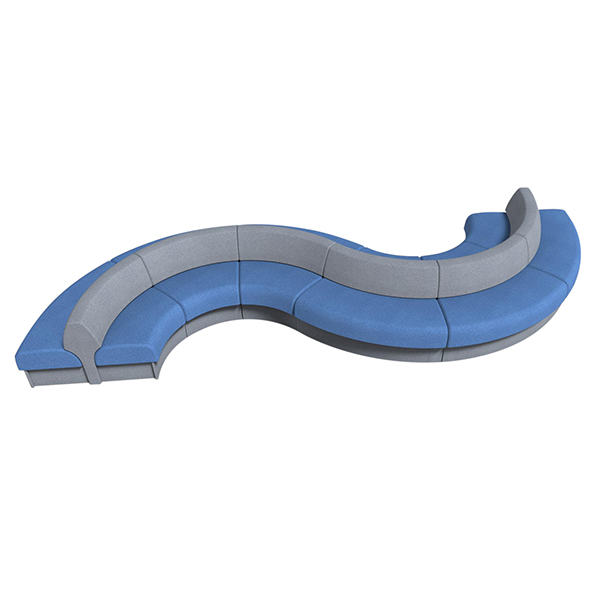
However, university teaching increasingly incorporates activities that require students to communicate with one another. Seminars, workshops, and project-based classes may involve small-group discussions or peer feedback. Movable university seating gives instructors more freedom to rearrange the room, allowing students to form clusters, face different directions, or create temporary discussion areas.
The distinction becomes especially important in rooms shared by multiple departments. A lecture hall used for economics presentations in the morning and design workshops later in the day may need different configurations. Fixed layouts provide consistency, while movable arrangements offer greater flexibility when academic schedules involve varied teaching formats.
Fixed Seating and the Organization of Large Lecture Halls
Fixed seating is commonly found in auditoriums and large university lecture theatres because it creates a defined layout. Each row has an established position, making it easier to plan the relationship between seating, aisles, entrances, and presentation equipment. Students can also identify their seats quickly when rooms are used for scheduled lectures or examinations.
Sightlines are another important consideration. In a sloped lecture theatre, fixed rows can be arranged to maintain a clear view of the lecturer and display screens. The spacing between rows, seat height, and overall floor gradient all influence visibility. Poor planning may leave students in the rear sections struggling to see presentation content, even when the room has sufficient seating capacity.
Accessibility must also be incorporated into the layout rather than treated as an afterthought. Wheelchair spaces, companion seating, accessible routes, and appropriate aisle widths need to be considered during the initial design. A carefully planned fixed arrangement can provide predictable access throughout the room, although future changes may require more substantial adjustments.
Movable Seating for Flexible Learning Environments
Movable seating supports teaching formats that do not rely on a single forward-facing arrangement. In smaller classrooms, students can reposition seats to work in pairs, form discussion circles, or collaborate in groups. This flexibility allows the physical environment to respond to the activity rather than forcing every lesson into the same configuration.
Room management, however, becomes more involved. Instructors or facility teams may need to allocate time for rearrangement, establish rules for furniture placement, and check that accessible paths remain unobstructed. Storage space also matters: unused seats and attached writing surfaces must have designated locations when the room is reorganized.
The distinction between flexible furniture and genuinely adaptable space should not be overlooked. A room with movable seats may still have fixed power outlets, teaching equipment, or narrow circulation routes that restrict possible layouts. Effective planning considers these architectural elements alongside the furniture itself, so that rearrangement does not interfere with visibility, movement, or access to learning resources.
Matching Seating Configurations With Campus Activities
A university does not necessarily need to adopt one seating type across every teaching space. Large lecture theatres often benefit from fixed rows, while seminar rooms, innovation labs, and collaborative learning areas may gain more from movable arrangements. A campus-wide plan can assign furniture according to room function instead of applying one standard to every department.
Some educational environments also benefit from a hybrid approach. Fixed seating can establish the main audience area, while movable tables and chairs provide additional capacity for group activities or presentations. This arrangement is useful when a room hosts both formal instruction and occasional interactive sessions, provided that the different zones do not obstruct circulation.
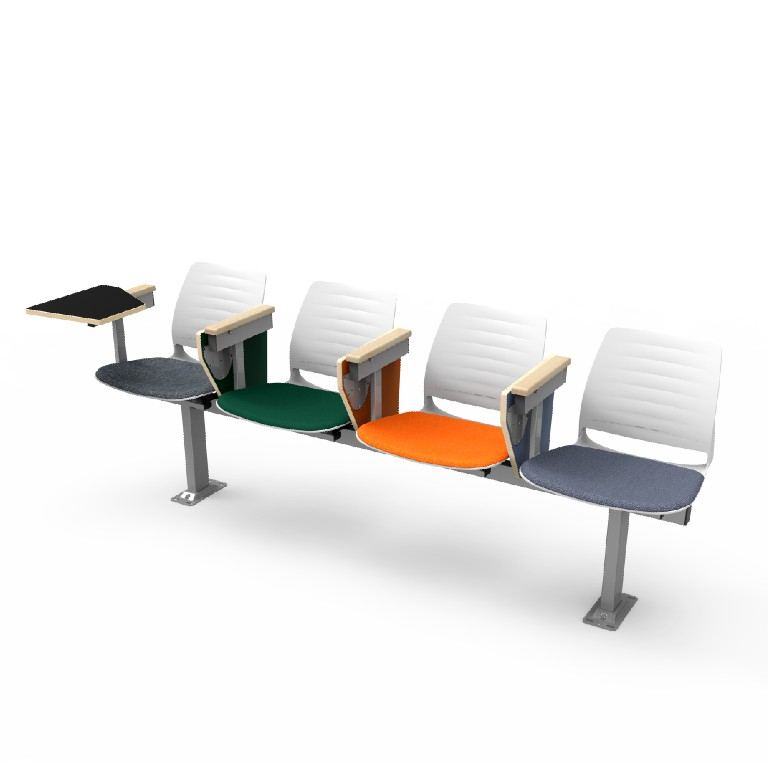
The Titan Flex L-E03 offers an example of an educational seating configuration that combines a seat with an integrated writing surface. Its PP back, padded PP seat, and 18 mm laminated plywood tabletop are supported by a powder-coated cold-rolled steel stanchion and base. Such a format can be considered for learning spaces where students need an individual place for note-taking and written work.
Conclusion
The decision between fixed and movable university seating is ultimately shaped by how a lecture hall is expected to function throughout the academic year. Fixed layouts suit spaces with stable teaching arrangements and carefully planned sightlines, while movable options support changing activities and more interactive lessons. Some campuses may find that a combination serves their facilities better than either approach alone.
Through its educational seating range, Leadcom Seating provides options for different campus environments, giving institutions another consideration when aligning furniture arrangements with teaching needs. A successful lecture hall is not defined simply by how many students it accommodates, but by how effectively its layout supports learning.